The Wellness Culture
Wellness, Holistic Health, Optimisation, Longevity, Bio-hacking - we are probably very familiar with such buzzwords as children of the 21st century. Wellness is everywhere today, on social media, in that new studio around the block, in our supermarkets, at work, our bookshelves, on tv, and yes, even on the menu at the local coffee shop. ‘Hey, I just wanted a cappuccino, not sure am ready to try the functional reishi decaf flat white with micro foamed oat milk thanks’.
Is functional mushroom coffee wellness culture gone mad? What is wellness, how did we get to drinking reishi lattes in specialty coffee stores that look the same in any global city? Is wellness just a fad? How to truly ‘be well’ then? Questions we shall explore below.
Now just a quick disclaimer; the author of this may come across as a hater already, however, in all honesty he is the biggest wellness bro; meditation coach, ice bather, sleep tracker, hierba maté & specialty coffee addict, hobby triathlete, yoga yuppie, and chia seed muncher. Has he fallen into the wellness trap? His dear friends would say yes, he would say no – he just likes being healthy – he defends. Sounds a bit hypocritical and vain don’t you think? If he just wants to be healthy, but in reality, is just another wellness guru, then what is the difference between ‘health’ and ‘wellness’?
Some definitions
According the Merriam-Webster, the wellness is ; ‘the quality or state of being in good health especially as an actively sought goal’
The Cambridge dictionary defines it as; ‘activities that are designed to help people feel healthier and happier, or the business of providing these activities’
In the Cambridge dictionary the noun health is listed as a synonym to wellness (I’d disagree) defining it as; ‘the condition of the body and the degree to which it is free from illness, or the state of being well’
Ok, let’s unpack these. Well is ‘the quality or state of being in good health’ and the suffix -ness turns that into a noun, so far a synonym for healthy. However, in the second part of the first definition, lies the distinction – ‘especially as an actively sought goal’. That reframes wellness as goal or activity, rather than just a state (of being healthy)?
In my subjective opinion wellness is an idea, a culture, or lifestyle. It’s the umbrella of activities to be healthy, to be in the best possible mental and physical state, to be the most optimal version of yourself. You may have noticed I used ‘to be’ a lot here. So is wellness, in that vein, a goal or imagination, a set of lifestyle activities, a way of living for self-optimisation or hyper-personalisation of the self? Perhaps so. Let’s first examine how the fuck did we get to this point of nervous system regulation, glucose trackers, and functional superfoods?
A brief history of wellness
Wellness is by no means a new concept and can be traced back far into human history all the way to Aryuveda approximately 3,000 B.C-1,500 BC. In Sanskrit, ayus means life and veda knowledge or science, thus Ayurveda is ‘the science of life’. The dietary adjustments, herbal remedies and lifestyle changes like yoga, meditation, breathing exercises and massage, all contribute to the mental and physical wellbeing of the practitioner. All of this was not done with the sole intention to treat illness or disease, rather the goal was to prevent it from occurring in the first place.
A similar pattern emerges in traditional Chinese medicine around 2,500BC; not just a medicine or treatment of specific illnesses or symptoms, but also a set of practices and substances to prevent illness by addressing root imbalances of energy circulation or qi flow, ingesting herbal medicine burning dried herbs near the skin and practicing forms of therapeutic massage. Sounds a bit like Ayuvedic pranayama or massage, right? Many such practices survive until today, even though some are widely viewed in modern scientific terms, as pseudo-science or lacking of any scientific evidence. Whether meridians are real or illnesses are caused by imbalances of inner energy is not the scope of this article. What this demonstrates, is that modern wellness practices, tools, superfoods and the like, are not as new as we feel.
One thing to bear in mind, however, is that health in the Bronze age landscape was radically different than ours. The rise of the first major agricultural cities, brought humans, waste, and domesticated animals into unprecedented proximity. Waterborne and parasitic infections were ubiquitous, crowd diseases such as tuberculosis and leprosy could spread easily, and osteoarthritis and dental pathologies were considered normal. Suffering was rife, infant mortality was high, and virtually no sanitation or medical infrastructure existed. Therefore, it seems logical that prevention was favourable to treatments, such as bloodletting and manual tooth extraction. (Suddenly all of a Monday morning brain fog doesn’t seem to bad…).
Fascinating as the archaeology of disease is, though, when did wellness really become the concept we recognise today?
Fast forward a few thousand years and the word ‘wellness’ itself shows up in English coined in the 1650s as the plain opposite of illness. What follows is centuries of reinvention. Samuel Hahnemann develops homeopathy in the 1790s, Andrew Taylor Still develops osteopathy in the 1870s, and by the early 1900s doctors are prescribing diet, exercise, fresh air and hydrotherapy as medicine in its own right. Then in the 1970s, Dr. John Travis opens the world's first dedicated wellness centre in California, and the idea escapes the clinic for good, spreading into fitness studios, spas, and the self-help shelf.
The modern wellness industry
From the 1980s, in the dawn of modern neoliberalisation, it stops being a philosophy and becomes an industry: corporate wellness programs, the spa and fitness boom, a parade of self-help gurus. It hasn't slowed down since, the global wellness economy just hit a record $6.8 trillion, forecast to reach $9.8 trillion by 2029. Somewhere between preventing waterborne disease in a Bronze Age city and Bryan Johnson's supplement stack, ‘not dying of dysentery’ became ‘optimal cortisol levels’. So how did we get from preventing disease in a hostile environment, to craving an ice bath every time we feel a bit more tired than usual on a Monday morning?
In the modern Western World dysentery is not a public health concern anymore, however, other challenges are widespread, such as chronic stress, burnout, anxiety, loneliness and other mental health concerns. Especially young people today, am looking at you Gen z’s and us Millenials, feel more isolated, stressed and anxious than their boomer counterparts.
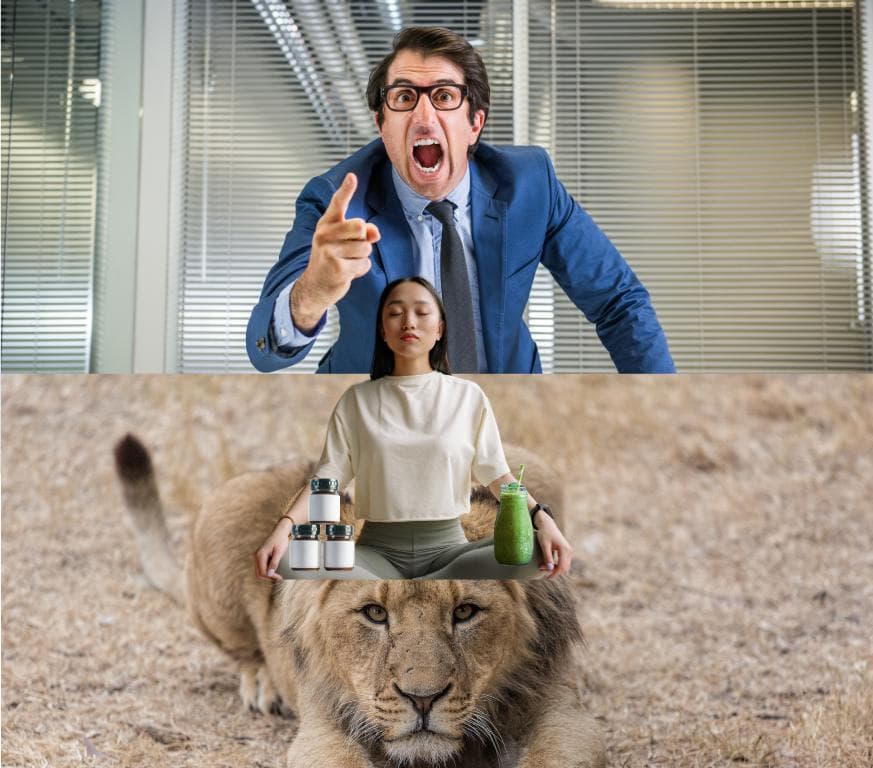
Facing the new predators in the prairie (demanding bosses, sales targets, perfect looking people on social media, etc etc…), young people increasingly turn to alternative solutions that promise to make them feel better and healthier, such as exercise, contrast therapy, and wearables amongst many others. But it’s worth naming the context this all sits inside. The wellness industry, as an industry, really only came to be in the 1980s with the dawn of neoliberalism and one of its effects; the cult of individualism; the social attitude that treats personal success, freedom, and self-interest as the highest goals in life. A highly individualistic society values, often even demands people, to be better, smarter, prettier, more productive, more this or that. . At the same time more and more young people feel disheartened at their corporate job, feel like something is missing in their lives, or feel simply not good enough.
Society would say, you have not optimised your life enough, that’s why you are falling behind. The wellness industry, meanwhile, has all the answers and, slowly, has been growing faster than ever since Covid. [grinningly rubbing hands together]).
Covid shows us again, that the cult of personalisation is just one culprit among many, and that the picture is deeply nuanced. Covid probably just further accelerated another social trend that was already taking place. In the West, young people already accounted for the largest age group suffering from social isolation. This number spiked during Covid and hasn’t clearly come down since. We are hyper-connected and online, yet still often deprived of meaningful and real social connections. Institutions haven’t really helped us either since then, we have no church or community centre to go to, barely any time to go to the pub or go party and why would we even do that because alcohol is bad for us anyway! ‘I‘m feeling empty and like shit so much of the time though, it’s impacting my productivity at work, I must be eating unhealthily and not exercising enough, I’ don’t like the way I look either, so I’ve absolutely got to do something about this to feel better again, to become the best version of myself!’ Any of this ring a bell?
Optimisation as the new religion, influencers as the new gods
Millennials and GenZ are by far the largest wellness adopters and have the highest concerns about their wellbeing, but at the same time, the mental health struggles they face keep growing alongside it. Perhaps the Huberman prescribed ice bath, or Peter Attia’ longevity toolkit are mere band-aids, unable to address the root cause.
The gist: we're constantly fed information on how to live the most optimal life, which often produces nothing but productivity guilt when we fall behind. Skip your two-hour caffeine delay because you just want to enjoy your morning coffee? Shame on you. People like Huberman have millions of followers worldwide who follow his protocols to the letter, a bit like Jesus and the Ten Commandments, no?
If Andrew Huberman says waking up at 5am and not drinking caffeine until 2 hours after waking is bad, I must also do it and shame on me if I’m enjoying my morning cup of home brew first thing in the am. People like Huberman have millions of followers all over the world, they follow his protocols to the T. Sounds a bit like Jesus and the 10 commandments? But if a podcaster is a god and self-optimisation a religion, does it actually replace the communal ties our parents or grandparents generations got from church, from neighbourhood, from a tight social fabric? I argue no; we are stuck in a never-ending trap.
The wellness trap
The other day I went to a prominent gym/sauna/ice-bath wellness space in London. I’d go every morning in the vain hope the contrast therapy would help me feel better about my raging hangover. It did so for about an hour after, until my existential dread slowly kept creeping back in. What really marked me was how on the third day of this, after having attended a yoga session there (the ice bath did not cut it anymore), I tried to give the teacher some feedback on the ending meditation. He listened with an appreciating surprise while hurriedly preparing the mats for the next class. I sensed he was in a rush and not really able to speak, as I left the studio I realised why. There were about 20 young women sitting outside in the hallway, in their Oysho clad yoga outfits, sipping matcha lattes or other fancy drinks while their makeup clad faces were glued to their phones awaiting the next class to start. ‘OMG I thought to myself; I’m just another Karen fallen deep into the wellness trap!’ I was shocked, they were waiting as if on a conveyor belt, physically together in space, yet all so far away from each other or the present moment, sucked deeply into their own online worlds. This was just a subjective experience, seen though my own warped, critical and biased gaze, yet one thing I couldn’t help asking myself, was if these things are really connecting us or merely giving us an illusion of connection, actually only re-enforcing our selfish, vain and never-ending desires?
I don’t want to diss yoga classes or wellness studios here, and am sure that many beautiful long term friendships and relationships have been formed there, however, my personal opinion is that on average people don’t really meet at such places, rather just drag themselves there after work and then hurriedly leave to make dinner, in their optimally planned day…Of course there are exceptions, but real communities often lack in the wellness space, even further enabling social isolation. Modern cities carry some of the blame too, we're no longer forced into tight-knit community life, don't have to put up with that annoying friend at the pub table every week, don't have to worry about last Saturday's gossip making the rounds. But at what cost?
Robert Putnam already saw this coming in his 1995 essay ‘Bowling Alone: America's Declining Social Capital’, saw the shift from people traditionally bowling in leagues, to bowling alone. Perhaps tolerating that annoying friend over a pint was not so bad for us after all?
How to live well?
So what is the solution to all of this, whether to social isolation, chronic stress or simply wanting to ‘feel good’? Maybe it isn’t a glucose tracker, or a supplement stack, or an ayuvedic retreat. Paraphrasing Dr. Jordan Shlain from his piece ‘The Longevity Hustle’;
The real path to longevity looks nothing like the Instagram version. It’s boring. It’s consistent. It’s the same advice your grandmother gave you: eat well, move regularly, sleep enough, manage stress, maintain relationships, and don’t smoke. These aren’t hacks — they’re principles.
So, unless you’re a genuine outlier, maybe there is no need to go full keto, to ingest peptides, or worry about your HRV? I’m not saying diets are bad, that we don’t need wearables at all, or that an ice bath is a waste of time, I still enjoy an ice bath and wear my Garmin watch to sleep. They all have their own benefits, case by case. What I am saying is that we don’t need to obsess so much, that the basics are usually enough and that we don’t need to listen to all of those at the Eudaimonia summit trying to sell us the fix for our supposedly broken lives.
Perhaps we should focus on our own personal eudaimonia; getting to know ourselves, working out what actually works best for us and acting according to our own nature with reason and compassion, for ourselves and for others. No need to do everything that influencer on social media said, because chasing that will never satisfy an appetite without ceiling. Enjoy wholefoods, go to gym or maintain your morning routine, just don’t obsess about it, don’t let it walk over the wholesome things you already enjoy doing. Maybe continuing that deep conversation with a partner or friend past bedtime matters more, in that moment, than protecting your circadian rhythm, and in the long-run, it might do more for you than your 5am wake-up could ever do.
You’re not alone in this long journey of self-exploration we call life. We’re all in the same boat, more alike than you think, carrying similar values and the same fears. You might need other people more than you think.